

‘Magnifica Humanitas’: Three quick observations (and a geeky P.S.)
[Pope Leo declares just war ‘now outdated,’ apologizes for legitimization of slavery by the Holy See, and calls treatment of migrants a ‘litmus test’ for social justice]

□ SEE ALSO


There’s a lot to unpack in Pope Leo XIV’s first encyclical, Magnifica Humanitas, a major new contribution to Catholic social teaching that takes on technology and artificial intelligence. Unhappily for me, it drops at a time when I’m in the throes of end-of-term testing and grading, and I can’t begin to give it my full attention for a few weeks yet. (See my friend John Stanczak’s initial thoughts at his Substack!)
Still, I have a few quick observations I’d like to share on topics that are not at the heart of this encyclical. Among the document’s surprises is how the pope’s reflections expand to embrace other topics, some of which have become hallmarks of Pope Leo’s year-old papacy. Three in particular stand out to me. (I also can’t resist a geeky P.S.)
1. Just war doctrine is “now outdated”
Technology and A.I. have major implications for modern warfare. Here Pope Leo further solidifies the theme of peace in his first year as pope: While not rejecting “the right to self-defense in the strictest sense,” Leo stunningly calls out out just war doctrine as “now outdated.”
Today, more than ever, without prejudice to the right to self-defense in the strictest sense,1 it is important to reaffirm that the “just war” theory, which has all too often been used to justify any kind of war, is now outdated. Humanity possesses far more effective and capable tools for promoting human life and resolving conflicts, such as dialogue, diplomacy and forgiveness. The use of force, violence and weapons reflects a relational poverty that always has disastrous consequences for civilian populations.
As that “reaffirm” suggests, the deprecation of just war doctrine is not an unprecedented idea, but it’s never before been stated this bluntly and authoritatively. Leo’s predecessor, Pope Francis, once declared, “There is no such thing as a just war: they do not exist!” This, though, was in an address, not an encyclical, and could be interpreted in a nuanced way. A bit more cautiously, in his encyclical Fratelli Tutti, Pope Francis wrote:
We can no longer think of war as a solution, because its risks will probably always be greater than its supposed benefits. In view of this, it is very difficult nowadays to invoke the rational criteria elaborated in earlier centuries to speak of the possibility of a “just war”. Never again war!
For some conservative Catholics who bracket the entire papacy of Francis as an aberration, it may come as a surprise that Cardinal Joseph Ratzinger, the future Pope Benedict XVI, noted in a 2003 interview, “Given the new weapons that make possible destructions that go beyond the combatant groups, today we should be asking ourselves if it is still licit to admit the very existence of a ‘just war.’” Pope John XXIII, in his 1963 encyclical Pacem in Terris, declared, “In this age which boasts of its atomic power, it no longer makes sense to maintain that war is a fit instrument with which to repair the violation of justice.” The Compendium of the Catechism of the Catholic Church offers a catalogue of quotations attesting the Church’s growing skepticism of war in the modern era.
Even so, Pope Leo’s direct deprecation, in a papal encyclical, of just war doctrine is a bold step forward, recalling Pope Francis’s repudiation of the death penalty as “inadmissible.” Historically, it might be said that Catholic teaching was held to allow lethal force in three cases:
self-defense/defense of innocent life;
just war; and
capital punishment.
In the 1990s, above all in his great encyclical Evangelium Vitae, Pope St. John Paul II collapsed the case for capital punishment to defense of innocent life, essentially dismissing retributive justice as a valid basis for the death penalty. Reaffirming the updates to the Catechism of the Catholic Church he authorized two years earlier, John Paul II declared:
If bloodless means are sufficient to defend human lives against an aggressor and to protect public order and the safety of persons, public authority must limit itself to such means, because they better correspond to the concrete conditions of the common good and are more in conformity to the dignity of the human person.
Having made licit recourse to the death penalty dependent on the hypothetical insufficiency of nonlethal means to “defend society,” John Paul added a prudential judgment all but closing the door to that possibility: “Today, however, as a result of steady improvements in the organization of the penal system, such cases are very rare, if not practically non-existent.”
A quarter century later, the door that John Paul II all but closed was decisively shut by Francis, who in his 2020 encyclical Fratelli Tutti declared the death penalty “inadmissible” and said that “there can be no stepping back from this position.” In 2018, addressing Francis’s earlier revision of the Catechism along the same lines, the Congregation for the Doctrine of the Faith declared this reformation of Catholic teaching an “authentic development of doctrine.”
Pope Leo’s deprecation of just war doctrine will need further unpacking and discussion, and could lead to yet another revision of the Catechism.
Now, with Magnifica Humanitas, it seems that the last few popes have effectively collapsed all licit uses of lethal force into a single category: defense of innocent life (“in the strictest sense,” in Leo’s words). The narrowing of the allowable scope of lethal force now extends back over half a dozen papacies, going back to Paul VI (“Never again war!”) and John XXIII (Pacem in Terris).2 This appears to me to support the “presumption against violence” interpretation3 not only of just-war theory, but of fifth-commandment issues generally. For Catholics who wish to cling to older Catholic teaching affirming the death penalty and allowing a broader scope of war, dismissing recent papal teaching as aberrant seems to me increasingly difficult.
2. Pope Leo apologizes for legitimization of slavery by the Holy See
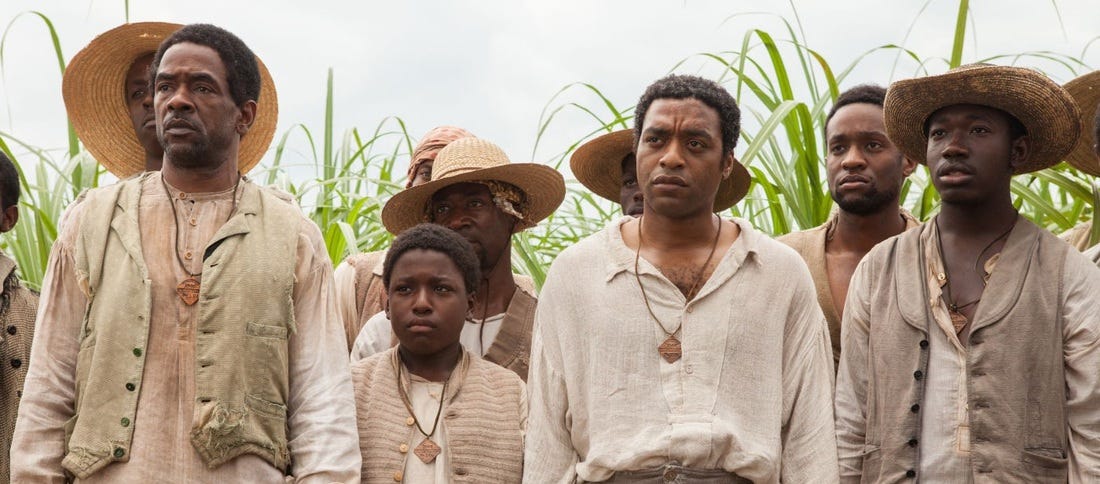
Magnifica Humanitas appropriately confronts “new forms of slavery,” notably the exploitation of labor, including children and adolescents, working in dangerous conditions to extract rare earth elements needed for smart technology. This theme leads Leo to offer a historic apology for the Church’s role in legitimizing enslavement of human beings in the past. “In the early modern period,” Leo acknowledges,
the Apostolic See of Rome, responding to requests from Sovereigns, intervened several times in order to regulate and legitimize forms of subjugation, and, in certain cases, the enslavement of “infidels.” It was only in the nineteenth century that a formal, absolute and universal condemnation of slavery was clearly articulated, notably under Pope Leo XIII.
This frank acknowledgement contrasts notably with the earlier Pope Leo’s own inaccurate claim that opposition to slavery had always been the Church’s stance (I will have more to say about this in a future post). Leo XIV continues:
This development offers a clear example of the Church’s growth in understanding the perennial truths of Revelation that she safeguards. Although there was not always consistency in practice — given that slavery was long tolerated before being unequivocally condemned — there has been a continuous affirmation throughout history of the dignity of every human being, created in the image of God, even if it took eighteen centuries for its full incompatibility with slavery to be explicitly recognized. This constitutes a wound in Christian memory, one from which we cannot consider ourselves detached. It is impossible not to feel deep sorrow when contemplating the immense suffering and humiliation endured by so many in stark contrast to their immeasurable dignity as persons infinitely loved by the Lord. For this, in the name of the Church, I sincerely ask for pardon.
While this is not the Church’s first expression of sorrow over Catholic complicity in slavery, it is the first time that a pope directly acknowledged that enslavement of human beings had been “legitimized” by the Holy See. In 1985, while visiting Cameroon, John Paul II expressed sorrow over the involvements of “the sons and daughters of the Church” in regard to the slave trade, asking forgiveness “from heaven and from our African brothers and sisters.” He did not, however, explicitly address the role of the Holy Fathers of those “sons and daughters” in the evil of slavery. Two years ago, under Pope Francis, the Vatican formally repudiated the Doctrine of Discovery, which provided the theoretical basis for colonial-era Europeans “claiming” the lands of indigenous persons. While declaring that this concept was never part of Catholic teaching, the Vatican statement did acknowledge that scholars had connected it to a number of papal bulls, namely Dum diversas (1452) and Romanus Pontifex (1455) of Nicholas V and Inter caetera (1493) of Alexander VI.
Magnifica Humanitas is an important step forward for the Church in acknowledging that the Holy See did not just fail to condemn slavery, but “regulated and legitimized” it.
3. Treatment of migrants is a ‘litmus test’ for social justice
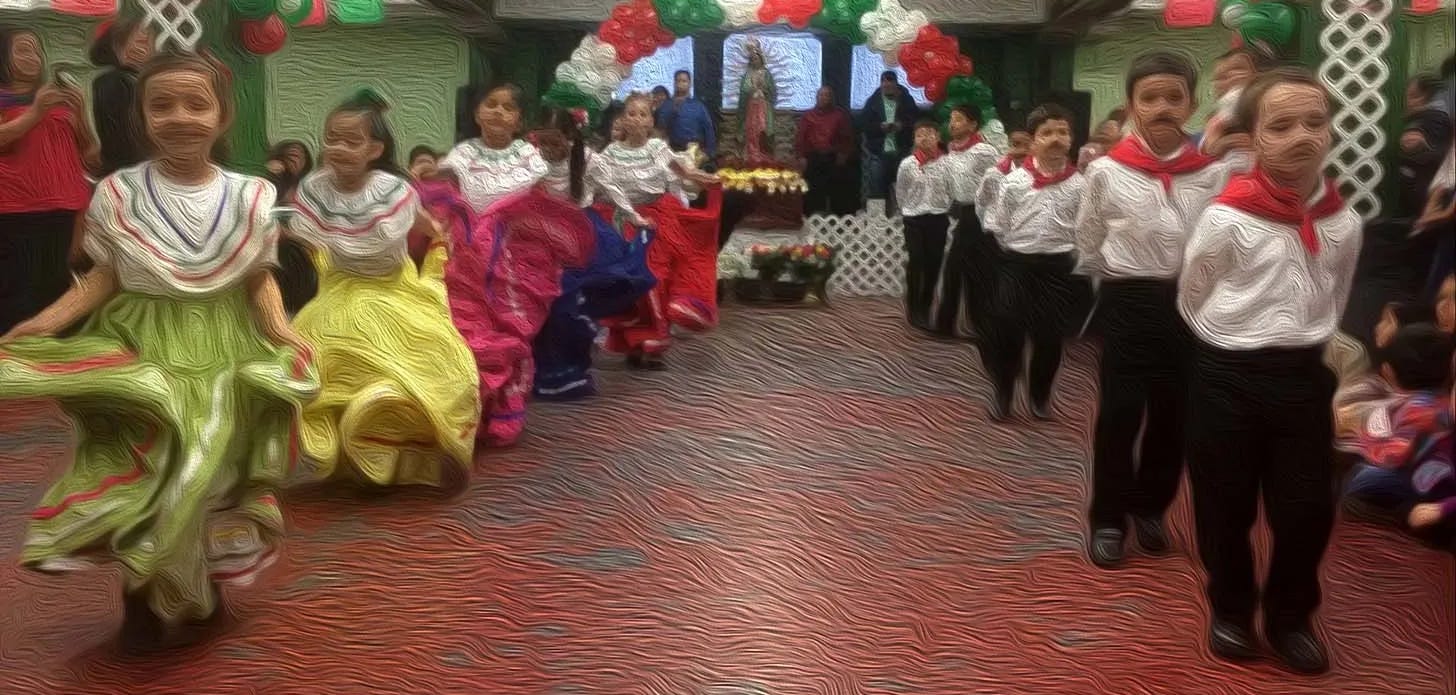
The phrase “social justice” has become a dirty term for some Catholics and other Christians, but Pope Leo makes it a significant focus of Magnifica Humanitas, calling social justice “a concrete way of following Jesus and remaining faithful to the Gospel.” He also highlights how societies treat “the treatment of migrants, refugees and those forced to move due to poverty, violence, climate change and environmental disasters,” going so far as to call this issue “a litmus test for social justice today.”
The recent Magisterium has insisted that social justice begins with the least among us. Saint John Paul II spoke of a preferential option for the poor that must guide both personal and societal choices, while Pope Francis denounced a “‘throw away’ culture” that generates ever new forms of exclusion. From this perspective, social justice requires us to look at individuals and communities, starting with the most vulnerable: the poor, migrants, refugees, internally displaced persons, victims of violence and people living in urban or existential peripheries.
Pope Leo highlights “structures of sin” in “economic and cultural systems that produce inequality almost automatically.” While connecting these issues to digital technologies, Leo goes beyond his encyclical’s technological concerns to say:
A litmus test for social justice today is the treatment of migrants, refugees and those forced to move due to poverty, violence, climate change and environmental disasters. The way a society treats them reveals whether its sense of justice is driven by fear or by the spirit of fraternity. Pope Francis urged us to see migrants not simply as a problem to be managed, but as a living image of the People of God on the move. They are people with dignity, resources and dreams, who have the right to be treated with respect and to ask to become active members of the societies that welcome them. Social justice in this area entails at least two complementary commitments. On the one hand, this means protecting the rightful hopes of those forced to leave by ensuring safe and legal routes, dignified conditions for receiving them, and genuine pathways to integration. On the other hand, it means promoting the right to remain in one’s homeland in peace and security by addressing the root causes that force people to migrate, including those linked to economic injustices and the climate crisis. When these rights are respected, migration can become an opportunity for encounter and mutual enrichment among peoples.
In continuity with his predecessors, Pope Leo has addressed migration both by acknowledging the rights of nations to control their borders and also emphasizing the necessity of responding to migration first and foremost as an issue of human rights and mercy for those in need rather than emphasizing enforcement and punishment. Magnifica Humanitas continues this pattern.4

P.S. Gandalf speaks: A pope quotes The Lord of the Rings in an encyclical
Finally, a geeky postscript: At least one prior pope has quoted J.R.R. Tolkien, in a homily; with Magnifica Humanitas, Pope Leo becomes the first pope I’m aware of to quote from The Lord of the Rings, and in an encyclical.
Two years ago, in a Christmas midnight Mass homily, Pope Francis quoted a well-known passage from a 1941 letter from Tolkien to his son Michael:
As a great teller of epic tales once wrote to his son, “I put before you the one great thing to love on earth: the Blessed Sacrament… There you will find romance, glory, honour, fidelity, and the true way of all your loves on earth” (J.R.R. TOLKIEN, Letter 43, March 1941).
A pious sentiment, on an explicitly Catholic subject, is obvious fodder for a papal quotation in a homily. It is more surprising to find the existential musings of the wizard Gandalf from The Return of the King quoted in an encyclical:
The twentieth-century Catholic author J.R.R. Tolkien, in the words of a protagonist in one of his novels, described our responsibility in this way: “It is not our part to master all the tides of the world, but to do what is in us for the succour of those years wherein we are set, uprooting the evil in the fields that we know, so that those who live after may have clean earth to till.”
Applying this thought, Pope Leo continues:
The civilization of love will not arise from a single or spectacular gesture, but from the sum total of small and steadfast acts of fidelity that serve as a bulwark against dehumanization. For this reason, it is worthwhile pausing to reflect on some aspects of how we, each in our own way, can cooperate in building the civilization of love. Without presuming to exhaust this theme, I would like to propose five paths toward daily and public responsibility: the need to disarm words, building peace through justice, adopting the perspective of victims, cultivating a healthy realism and reviving dialogue and multilateralism.
Read the whole thing. I’ll be back with more when I’m able!
□ SEE ALSO
Immigration, deportation, and Catholic principles: 21 points

The fundamental rights of human persons, and the obligations of legal authority, regarding emigration, immigration, residency, and deportation are matters of great concern in Catholic moral teaching. Still, the full weight of authoritative Catholic teaching on these subjects is seldom brought to bear when this topic is discussed.
Bishop Barron vs. Pope Leo? War and Church teaching

On Monday Bishop Robert Barron took to X-Twitter to propose what he called “a way past the absurd and deeply divisive ‘war’ between the President and the Pope on the Iran war.” Bishop Barron’s “solution” to this “war” between the president and the pope appears to amount to this:
Perhaps worth noting: While Pope Leo makes a point of not rejecting “the right to self-defense in the strictest sense,” Leo also doesn’t explicitly affirm this right. He simply says that the deprecation of just war doctrine as “now outdated” is made “without prejudice to” the right to self-defense. N.b. I draw no conclusions from this; I’m simply making an observation.
Even Blessed John Paul I, in his short pontificate of just 34 days, managed to establish his desire “to encourage world peace and social justice” among the priorities of his papacy. He spoke about this in an address to the Vatican Diplomatic Corps, and particularly “made numerous appeals in favour of peace in the Middle East.”
For more on the “presumption against violence,” see Matthew Shadle’s historical analysis of theological interpretations of just war theory at his Substack, Window Light.
I can’t help noting that Pope Leo’s latest expression of concern for the human dignity of migrants happens to follow on the heels of Bishop Robert Barron’s latest defense of the Trump administration’s hard line on immigration enforcement. Bishop Barron also continues to articulate his bogus distinction between the supposed role of the pope in articulating moral principles and the supposed role of the president in applying those moral principles in specific situations—as if popes aren’t entitled to weigh in on specific situations. The fact that Pope Leo deprecated just war theory, which was at the heart of Bishop Barron’s previous comments on this front, is particularly hilarious to me!
Quick comments:
As I mentioned on Twitter, it's really a contemporary Pope, quoting Gandalf against black-pilling and doing the 6-7 at any opportune occasion.
I find the beef with "social justice" funny. The Church herself invented that term!
Ok the link about the rejection of "the doctrine of discovery", it's stated: «the contents of these documents were manipulated for political purposes by competing colonial powers in order to justify immoral acts». It then laments the inaction of the Church to fight those manipulations. That's very good and very fair! But I really dislike how Pope Leo XIV framed the question, and I've already commented with you on Facebook that there must be a distinction between chattel slavery (always condemned, sometimes not forcefully enough) and slavery as a system of organizing labor (accepted by the Apostles). I could say more, but those were supposed to be quick comments.
A great start! Two small points:
1, on vocabulary: "For some conservative Catholics who bracket the entire papacy of Francis as an aberration ..." There is nothing 'conservative' about the notion that a Catholic may ignore an entire papacy simply because they don't like the Pope in question. Actual conservatives blasted it as "cafeteria-style" when progressive Catholics simply disagreed with particular policies of, say, JP2 or B16 -- nobody on either side would have proposed the ludicrous notion that an entire papacy could be "bracketed." It's not "conservative" (and therefore anyone who holds to it isn't really), it's radical, extreme, quasi-heretical.
2, I'm vexed, terribly vexed, that you haven't weighed in on the *extremely* important issue of why the Latin text is not posted on the Vatican website. ;-)