

Confirmation: What exactly is it for?
[Why isn’t Baptism enough? Why another one-time sacrament of initiation?]

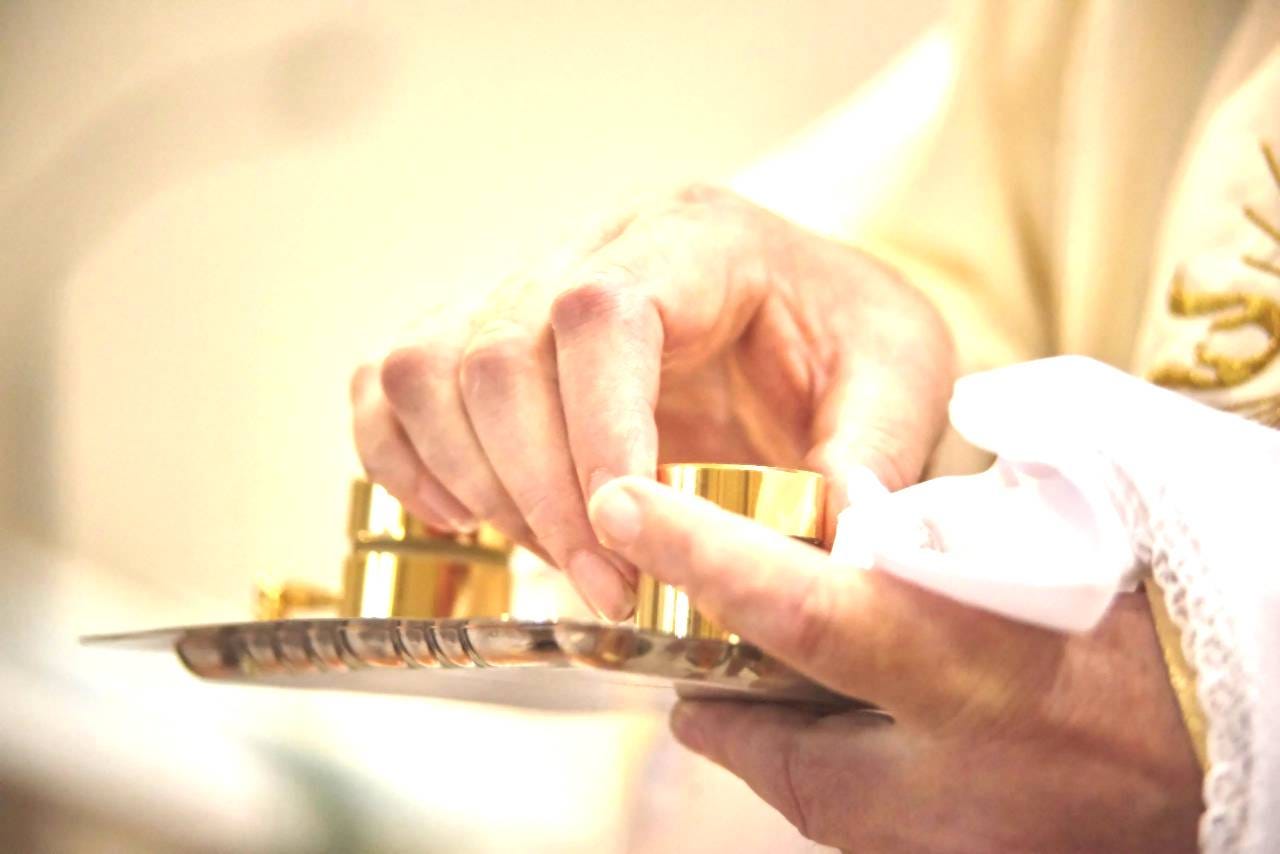
The Easter season, now in the sixth week in the Latin Church, is the season of Confirmation. Anticipating the arrival of Pentecost, the great Solemnity of the Holy Spirit, bishops visit parishes to anoint adolescent Catholics with chrism oil and pronounce the words “Be sealed with the gift of the Holy Spirit.” Since Catholics typically receive their first Holy Communion around age seven, it may seem natural to understand Confirmation as a celebration of growth or maturity, perhaps roughly corresponding to the Bar Mitzvah or Bat Mitzvah in Jewish communities celebrated when a child reaches the age of 12 or 13. But the ideas of “growth” and “maturity” don’t jibe well with the Catholic theological tradition regarding Confirmation—not to mention the Eastern practice of administering Confirmation to newly baptized infants (along with Holy Communion).
So what exactly is the Sacrament of Confirmation for? What does it do? Why do we need it? Why isn’t Baptism enough? This question isn’t as easy to answer as one might think; there’s a reason Confirmation has been semi-facetiously called “a sacrament in search of a theology.”
Confirmation is closely connected to Baptism; together they form a “double sacrament,” the Catechism says (CCC 1290). Confirmation is even said to be “necessary for the completion of baptismal grace” (CCC 1285). By itself, this may seem to imply that Baptism is “incomplete,” which doesn’t sound right.1 If someone dies with Baptism but without Confirmation, are they ready for heaven or not? What exactly is lacking in Baptism that needs to be “completed” by Confirmation?
On a quick perusal of the Catechism of the Catholic Church, one could be forgiven the impression that Confirmation is “like Baptism, but more so”—sort of Baptism 2.0. Which could be thought to imply, in turn, that Baptism is Confirmation Beta, which, again, can’t be right! Among the effects of Confirmation, the Catechism says (CCC 1303):
it roots us more deeply in the divine filiation which makes us cry, “Abba! Father!”;
it unites us more firmly to Christ;
it increases the gifts of the Holy Spirit in us; and
it renders our bond with the Church more perfect.
Then comes one last bullet point that offers something that’s not just more, but different: Confirmation
gives us a special strength of the Holy Spirit to spread and defend the faith by word and action as true witnesses of Christ, to confess the name of Christ boldly, and never to be ashamed of the Cross.
Here is an important insight: Confirmation is here connected, not with growth or maturity, but with strength and boldness, with bearing witness and confessing Christ in spite of potential difficulties. Looking more closely, the Catechism offers more evidence associating Confirmation with strength and facing difficulties and challenges (CCC 1293–1295).
Discussing the symbolism of chrism oil, the Catechism links oil, first, like the water of Baptism, to cleansing (anointing before and after a bath)—but also, unlike water, to limbering (as of athletes and wrestlers) and healing (soothing to bruises and wounds). Likewise, the Catechism says, Confirmation offers both “cleansing and strengthening”—the first shared with Baptism, but the second not.
Expounding the significance of the “seal” of Confirmation, the Catechism notes that “soldiers were marked with their leader’s seal.” It’s true that Baptism is also said to “seal” the soul for salvation, but the Catechism, perhaps reflecting the traditional idea connecting Confirmation with being a “soldier of Christ,” references the martial example in connection with Confirmation, not Baptism.
Building on these ideas, here’s something I’ve long told Confirmation students in CCD. It’s far from a complete theology of either sacrament, obviously, but it’s meant to clarify, in simple, intuitive terms, how Baptism and Confirmation are complementary without making Baptism seem incomplete or Confirmation redundant.
Baptism makes us ready for heaven. To go to heaven, Baptism is all we need. The Catechism says, “In those who have been reborn [in Baptism] nothing remains that would impede their entry into the Kingdom of God, neither Adam’s sin, nor personal sin, nor the consequences of sin, the gravest of which is separation from God” (CCC 1263). If a newly baptized baby dies without being confirmed, there’s no problem—Baptism is enough!
But we aren’t in heaven now, are we?
Do we face difficulties in life here on earth that we won’t face in heaven?
Do the saints in heaven wrestle with sin and temptation? Are they wounded in heaven by trials and tribulations? Are they called to strive and deny themselves like athletes running a race? Does anyone in heaven have to defend their faith? Do they have to be bold or resist being ashamed? Is it ever hard for them to praise Jesus or celebrate his love and mercy?
Life in this fallen world is different from heaven, isn’t it?
That’s what Confirmation is for.
In Baptism, Christ makes us citizens of heaven; in Confirmation, the Holy Spirit strengthens us to live out our heavenly citizenship amid the difficulties we face in this fallen, broken world. Baptism makes us God’s children; Confirmation helps to equip us to show people who don’t know Jesus what it means to be God’s children, even when it’s hard. Through Baptism, we already share in the life of the Holy Trinity; through Confirmation, we become more like Christ on earth carrying his cross, more ready for the crosses we have to carry.
If everyone died right after Baptism, Confirmation might not be necessary. But God wants most of us who are baptized to live and serve him, not just when we go to heaven, but first of all in this world—and that’s how Confirmation completes Baptism.
I’ve found this approach helpful. If you’ve ever wondered about this, I hope you find it helpful too!
The Catechism does say that “Christian initiation remains incomplete” after Baptism (CCC 1306—but Confirmation alone, without Holy Communion, doesn’t complete Christian initiation either! The common inversion of Confirmation and first Holy Communion in many jurisdictions in the Latin Church, with first Holy Communion often given around the age of seven, while Confirmation is given after and not before the Eucharist, only aggravates the confusion. Traditionally, theologically, and canonically, Confirmation should be received prior to first Holy Communion. So Confirmation is not meant to “complete” Christian initiation, but to “complete baptismal grace.”
Commenting on this past Sunday's Gospel, John 14:15-21, Augustine writes the following (in Tractate 74, excuse the old translation), on how we can have the Holy Spirit and yet still receive it "again." He's not directly commenting on confirmation, but as the promise to receive the Holy Spirit is a prophecy of Pentecost, and confirmation is the sacrament of Pentecost, it seems relevant:
How, then, does the Lord say, If you love me, keep my commandments: and I will ask the Father, and He shall give you another Comforter; when He says so of the Holy Spirit, without [having] whom we can neither love God nor keep His commandments? How can we love so as to receive Him, without whom we cannot love at all? Or how shall we keep the commandments so as to receive Him, without whom we have no power to keep them?
We are therefore to understand that he who loves has already the Holy Spirit, and by what he has becomes worthy of a fuller possession, that by having the more he may love the more. Already, therefore, had the disciples that Holy Spirit whom the Lord promised, for without Him they could not call Him Lord; but they had Him not as yet in the way promised by the Lord. Accordingly they both had, and had Him not, inasmuch as they had Him not as yet to the same extent as He was afterwards to be possessed. They had Him, therefore, in a more limited sense: He was yet to be given them in an ampler measure. They had Him in a hidden way, they were yet to receive Him in a way that was manifest; for this present possession had also a bearing on that fuller gift of the Holy Spirit, that they might come to a conscious knowledge of what they had. It is in speaking of this gift that the apostle says: Now we have received, not the spirit of this world, but the spirit which is of God, that we may know the things that are freely given to us of God. 1 Corinthians 2:12 For that same manifest bestowal of the Holy Spirit the Lord made, not once, but on two separate occasions. For close on the back of His resurrection from the dead He breathed on them and said, Receive the Holy Spirit. And because He then gave [the Spirit], did He on that account fail in afterwards sending Him according to His promise? Or was it not the very same Spirit who was both then breathed upon them by Himself, and afterwards sent by Him from heaven? . . .
Accordingly, the promise is no vain one, either to him who has not [the Holy Spirit], or to him who has. For it is made to him who has not, in order that he may have; and to him who has, that he may have more abundantly. For were it not that He was possessed by some in smaller measure than by others, St. Elisha would not have said to St. Elijah, Let the spirit that is in you be in a twofold measure in me. 2 Kings 2:9
As of this past Sunday, I’m fifteen years confirmed.
In 2010 I came back to the Church; then I found out there were Confirmation classes the following spring. After wrestling with the decision on whether to take them so soon, I did.
We learned what the Catechism teaches, and I combed it thoroughly for any red flags identifying it as something I couldn’t accept. I came close at one point, but that’s mostly because I didn’t understand the uniqueness of the papacy. I had already narrowed it down to the Catholic Church and the Eastern Orthodox Church; I didn’t want to choose the Catholic Church solely because it’s what I was familiar with—but I also didn’t want to reject the Cathedral Church on that basis!
In the end, I found I did believe what the Catechism taught (at least intellectually), and on May 10, 2011 I was confirmed.